
Organizations and employers.
Leaders, supervisors, and teams strengthening workplace culture

Drew CDC Services
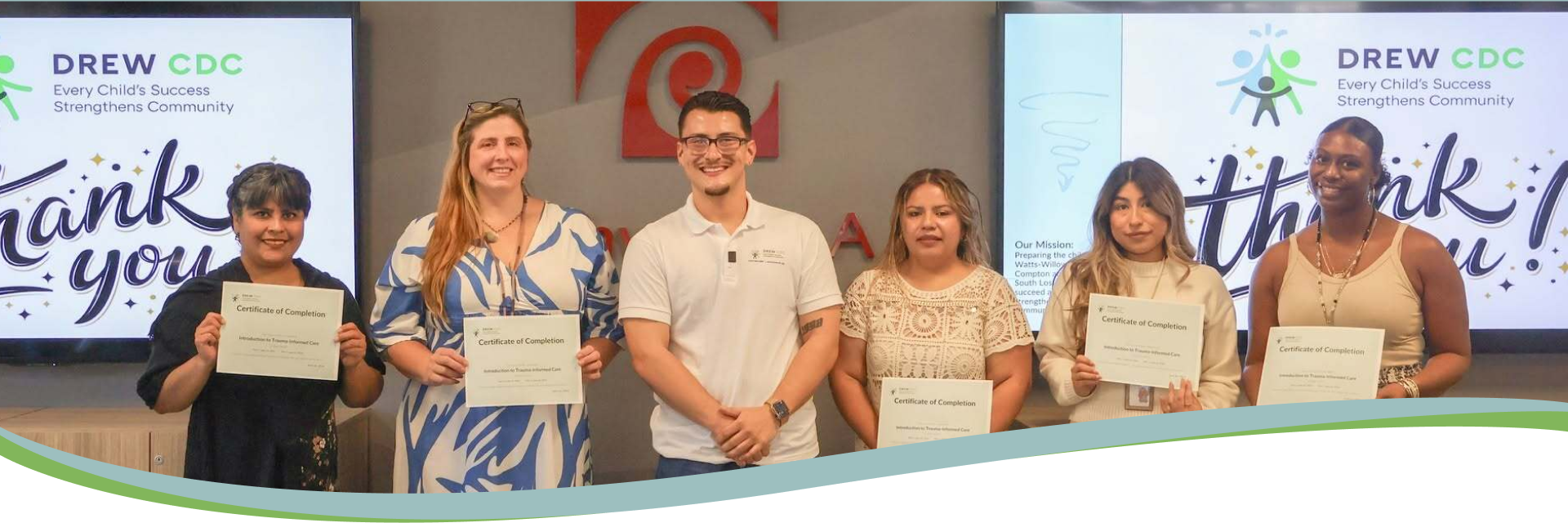
Since 2018, Drew CDC has helped organizations, professionals, and community partners across Los Angeles County build trauma-informed knowledge, strengthen relationships, and create safer, more supportive environments.

Serving Los Angeles County since 2018

In person or virtually

Customized to your organization

Over 5,000 professionals trained since 2018
Trauma-informed care is not a single workshop. It shows up in how staff talk with the people they serve, how supervisors respond in a hard moment, and how it feels to walk through your doors.
Drew CDC offers training, coaching, and consultation that meets your team where it is. Every service can be tailored to your goals, your audience, and your learning needs. We are rooted in Los Angeles County and work with organizations beyond it on request.
Leaders, supervisors, and teams strengthening workplace culture

Educators, caregivers, service providers, and administrators

Community organizations, leaders, and people supporting children and families

Trauma-informed care is an approach that recognizes how trauma and chronic stress can influence behavior, relationships, learning, health, and overall well-being.

Every partner starts in the same place, then builds from there.
Introduction to Trauma-Informed Care is a 2-module series covering how trauma affects individuals and relationships. It is required before any specialized series.
Once the Introduction series is complete, continue with the Childhood-Focused, Community-Focused, or Workplace-Focused series, or more than one. Specialized series typically include 4 modules.
Continue with coaching, ongoing consultation, or well-being workshops so new practices hold after the training ends.
Introduction to
Trauma-Informed Care
Our Introduction to Trauma-Informed Care training provides the foundation for understanding trauma and recognizing its impact. This interactive, relationship-centered series includes 2 modules and equips participants with practical, evidence-based strategies they can apply immediately to create safer, more supportive environments. It is the starting point for every partner, and is required before any specialized series.
 2 Modules
 Most trainings run in 2-hour modules
 In person or virtually
After completing the Introduction series, teams go deeper with one of three specialized training series. Each series typically includes 4 modules, and each can be taken on its own or combined with the others into a customized learning pathway.

Do you work with children and families?
How does trauma impact development?
These trainings explore how trauma affects young children and offer strategies for creating safe, supportive learning environments while promoting co-regulation, self-regulation, and positive relationships.
Recommended for: Early childhood educators, teachers, caregivers, administrators, and professionals supporting young children and families.
Ask about Childhood-Focused Trainings
Are you a community member or community-serving professional?
How do culture and community shape how we experience trauma?
These trainings explore the connection among trauma, resilience, and community healing, and offer strategies to support collective healing, strengthen relationships, and promote resilience across communities.
Recommended for: Community organizations, service providers, community leaders, and individuals supporting children, families, and communities.
Ask about Community-Focused Trainings
Are you a leader, supervisor, or member of a workplace team?
How can trauma-informed care strengthen workplace culture?
These trainings apply trauma-informed principles in workplace settings, with a focus on staff well-being, communication, psychological safety, and supportive organizational environments that benefit both clients and staff.
Recommended for: Organizations, leaders, supervisors, and teams interested in strengthening workplace culture.
Ask about Workplace-Focused TrainingsTraining is the first step. Drew CDC also provides ongoing support so individuals and organizations can keep applying trauma-informed practices long after the last module.

Individual and group coaching that supports the application of trauma-informed practices in everyday settings.

Support for organizations working to integrate trauma-informed principles into policies, practices, and organizational culture.

Interactive workshops focused on stress reduction, resilience, and staff well-being to support healthier, more sustainable workplaces.
Drew Child Development Corporation (Drew CDC) provides practical Trauma-Informed Care (TIC) training designed to support families, educators, and community professionals.

“I have a Master’s in Education, yet I never had a class throughout college or anything that taught me about what I learned through this very valuable series.”

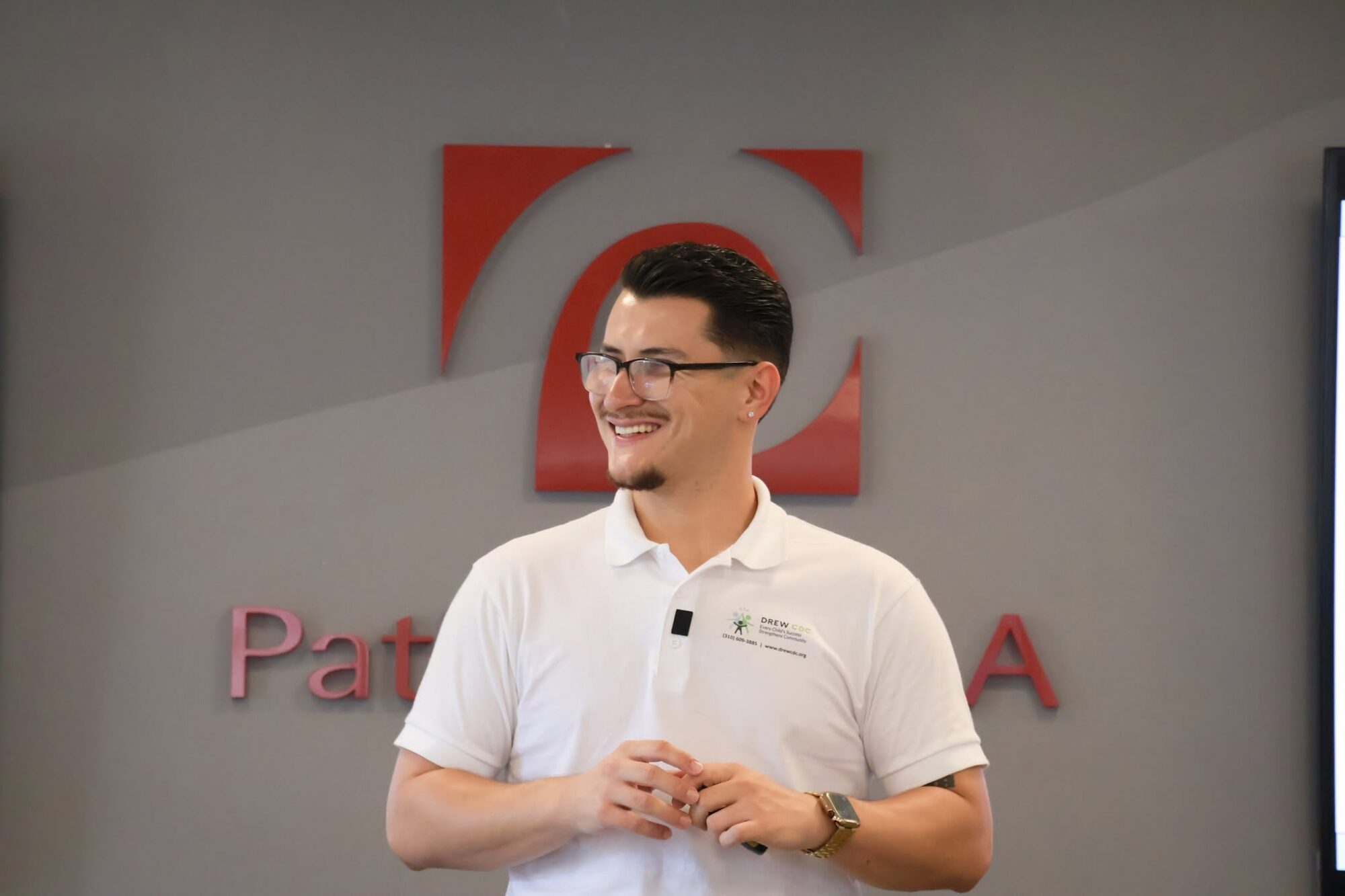
Drew CDC's trauma-informed care training, coaching, and consultation is led by Jose Ortiz.

Trauma-Informed Care Training & Development Coordinator
Jose Ortiz has more than six years of experience working with young children and families in early childhood education and community mental health settings. He develops and facilitates professional development trainings for early childhood professionals, provides trauma-informed consultation and coaching, and delivers psychoeducation programs for parents with young children.
He has served as a primary and mentor teacher in early care settings and is a trained SEEDS/Sprouts community-partner facilitator. Jose is a credentialed Early Childhood Educator, holds a master’s degree in psychology, and is currently pursuing a doctoral degree in applied psychology.
| Label | Answer |
|---|---|
| Formats | In person or virtually, depending on your organization's needs |
| Module length | Most trainings are delivered in 2-hour modules |
| Introduction series | 2 modules, required before any specialized series |
| Specialized series | Typically 4 modules |
| Group size | No minimum or maximum |
| Typical session times | Mornings from 9 to 11, or afternoons from 2 to 4. Other times can be arranged |
| Label | Answer |
|---|---|
| Pricing | Available on request. Pricing varies slightly with group size |
| Languages | Delivered in English. Spanish-language trainings are in development |
| Customization | All training, coaching, and consultation services can be tailored to your organization's goals, audience, and learning needs |
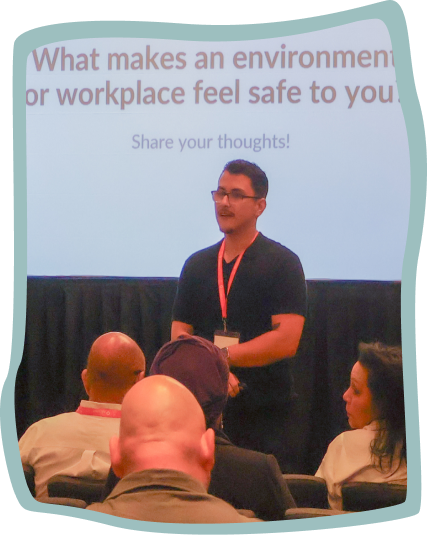
| Speaking engagements | Keynote presentations, workshops, and customized speaking engagements for conferences, organizations, and community events |
| Area served | Rooted in Los Angeles County, and available to organizations beyond the county on request |
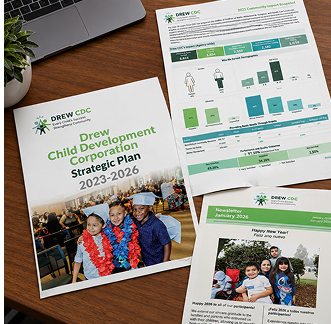
Explore our published trauma-informed care materials and resources.
View Trauma-Informed Care Publications
Trauma-informed care is an approach that recognizes how trauma and chronic stress can influence behavior, relationships, learning, health, and overall well-being. Rather than asking “What is wrong with you?”, it encourages us to ask “What has happened to you?”, “How can we support you?”, and “What strengths can we build on?” Understanding the impact of trauma helps people respond with greater empathy, strengthen communication, build trust, and foster meaningful relationships, whether with clients or with peers.
Start with Drew CDC’s Introduction to Trauma-Informed Care training. This interactive, relationship-centered series includes 2 modules and provides the foundation for understanding trauma and recognizing its impact. Participants explore how stress and trauma affect individuals and relationships, learn core trauma-informed care principles, and practice strategies for communication, connection, de-escalation, and relationship-building.
After the Introduction series, Drew CDC offers three specialized training series: Childhood-Focused, Community-Focused, and Workplace-Focused. Each series typically includes 4 modules and can be delivered on its own or combined with the others into a customized learning pathway. All are available in person, virtually, or in a hybrid format across Los Angeles County.
Drew CDC’s Childhood-Focused Trainings explore how trauma affects young children and offer strategies for creating safe, supportive learning environments while promoting co-regulation, self-regulation, and positive relationships. They are recommended for early childhood educators, teachers, caregivers, administrators, and professionals supporting young children and families.
Drew CDC’s Community-Focused Trainings explore the connection among trauma, resilience, and community healing. They offer strategies to support collective healing, strengthen relationships, and promote resilience across communities, and are recommended for community organizations, service providers, community leaders, and individuals supporting children, families, and communities.
Drew CDC’s Workplace-Focused Trainings apply trauma-informed principles in workplace settings, with a focus on staff well-being, communication, psychological safety, and supportive organizational environments that benefit both clients and staff. They are recommended for organizations, leaders, supervisors, and teams interested in strengthening workplace culture.
Drew CDC offers three forms of ongoing support. Coaching Support provides individual and group coaching to help apply trauma-informed practices in everyday settings. Ongoing Consultation supports organizations integrating trauma-informed principles into policies, practices, and organizational culture. Well-Being Workshops are interactive sessions focused on stress reduction, resilience, and staff well-being.
Drew CDC trainings are available in person, virtually, or in a hybrid format, depending on your organization’s needs. Most trainings are delivered in 2-hour modules. The Introduction to Trauma-Informed Care series includes 2 modules, and specialized training series typically include 4 modules. All services can be tailored to your organization’s goals, audience, and learning needs, and delivered individually or combined into a customized learning pathway.
Tell us about your team, your goals, and your timeline. Our Trauma-Informed Care team will work with you to identify the services that best fit. You can also reach us directly at (323) 249-2950 x2810.
Drew CDC
1411 West 190th Street, Suite 400
Gardena, CA 90248
Trauma-Informed Care: (323) 249-2950 x2810
Toll free: (800) 504-3739
Direct: (323) 249-2950
Fax: (323) 249-2970
Education Division: (323) 249-2950 x2910
Mental Health Division: (323) 249-2950 x2540
Child Welfare Division: (323) 249-2950 x1210 or x2660
Planning a conference, staff meeting, or community event? We also provide keynote presentations and customized speaking engagements.